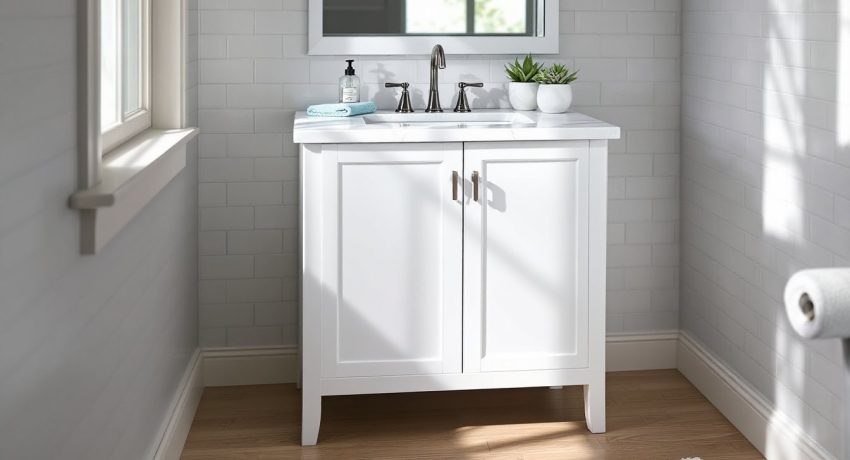

A 36-inch bathroom vanity with sink hits the sweet spot between functionality and space efficiency, big enough for daily use without overwhelming a mid-sized bathroom. Whether renovating a cramped powder room or upgrading a main bath, this size offers flexibility in style, storage, and installation. But not all 36-inch vanities are created equal. The difference between a smooth install and a weekend full of regret often comes down to understanding what works for your plumbing, layout, and actual bathroom dimensions.
Table of Contents
ToggleKey Takeaways
- A 36-inch bathroom vanity with sink provides the ideal balance between functionality and space efficiency, fitting most residential bathrooms without requiring plumbing reroutes or structural changes.
- Choose between freestanding vanities for easier DIY installation and wall-mounted units for a cleaner look, but wall-mounted options require precise drain and supply line heights.
- Prioritize cabinet construction using plywood over particleboard, soft-close hardware, and undermount or drop-in sink options based on your countertop material and design preferences.
- Measure your plumbing rough-in dimensions (typically 12 inches from the wall to drain center) before purchasing, and always dry-fit the vanity to verify alignment with existing supply and drain lines.
- Invest in durable countertop materials like quartz for low maintenance, and use 100% silicone caulk along edges to resist mold and prevent cracking from humidity changes.
- The 36-inch bathroom vanity size enhances resale value by signaling a finished, well-planned bathroom to potential buyers, while offering competitive pricing and wide availability across styles.
Why a 36-Inch Vanity Is the Sweet Spot for Most Bathrooms
The 36-inch bathroom vanity became an industry standard for good reason, it fits the majority of residential bathroom layouts without requiring major plumbing reroutes or structural changes. Most building codes require at least 21 inches of clear space in front of a vanity for comfortable access, and a 36-inch unit typically leaves enough room in a 5-foot-wide bathroom (the minimum size for a full bath under the International Residential Code in most jurisdictions).
From a practical standpoint, this size provides enough countertop real estate for toiletries, a soap dispenser, and maybe a small plant without feeling cluttered. The cabinet below usually includes two doors or a combination of drawers and doors, offering storage for cleaning supplies, extra towels, and under-sink plumbing access. Compared to smaller 24- or 30-inch models, the bathroom 36 inch vanity gives you actual usable counter space instead of a sink surrounded by a narrow ledge.
Another advantage: availability. Walk into any home improvement store or browse online, and you’ll find dozens of 36 inch bathroom vanity with sink options in every style from farmhouse to modern floating designs. This means competitive pricing and easier replacement down the line if your tastes change. The vanity’s depth is almost always 21 inches (the standard for bathroom cabinetry), which allows manufacturers to optimize drawer depth and door swing without protruding too far into the room.
For resale value, a 36-inch vanity signals a “real” bathroom to potential buyers. It’s large enough to feel like a finished space, not a half-measure. That said, always measure your actual wall space before ordering. Manufacturers list the cabinet width, but you’ll need to account for side molding, wall irregularities, and the shut-off valves behind the vanity. Leave at least a half-inch on each side for wiggle room during installation.
Types of 36-Inch Bathroom Vanities: Finding Your Perfect Match
Freestanding vs. Wall-Mounted Vanities
Freestanding vanities sit directly on the floor and are the easier DIY install. They hide plumbing connections behind a toe kick or cabinet base, and they don’t require you to locate and anchor into wall studs (though you should still secure the unit to the wall with L-brackets to prevent tipping, especially if you have kids). The downside: cleaning under and around them is a pain, and the floor beneath can trap moisture if the vanity isn’t sealed properly at the base.
Wall-mounted (floating) vanities attach directly to the wall framing, leaving the floor clear underneath. This makes mopping easier and can visually enlarge a small bathroom by exposing more floor tile. But, installation is more involved, you’ll need to locate at least two studs (16 inches on center is standard framing) and use a ledger board or heavy-duty mounting bracket rated for at least 200 pounds. Wall-mounted units also expose your plumbing, so plan to install a bottle trap or decorative P-trap cover unless you’re going for an industrial look. If your walls are plaster over lath or metal studs, you may need toggle bolts or blocking installed between studs, which can turn into a bigger project.
One often-overlooked factor: wall-mounted vanities require your drain and supply lines to be at precise heights. Most freestanding units have adjustable legs or leveling feet, giving you a few inches of play. Floating vanities don’t.
Single Sink Configurations and Countertop Materials
A bathroom vanity 36 inch setup almost always uses a single-basin sink, there’s just not enough width for a functional double sink without cramping each bowl to the point of uselessness. You’ll see three main sink configurations:
-
Undermount sinks attach beneath the countertop, creating a seamless look and making it easier to wipe crumbs or toothpaste directly into the basin. They require solid-surface countertops like quartz, granite, or marble (no laminate). Installation involves clips and silicone adhesive from below, so plan for a helper if the countertop is heavy.
-
Drop-in (self-rimming) sinks rest on top of the counter with a visible lip. They’re the easiest to install, just cut the hole, drop it in, and seal with caulk. The rim does collect gunk over time, but it works with any countertop material, including budget-friendly laminate.
-
Vessel sinks sit on top of the counter like a bowl. They make a statement, but they also add 5-7 inches to the overall vanity height, which can feel awkward if you’re under 5’6″ or installing in a kids’ bathroom. Faucets for vessel sinks need to be taller to clear the basin rim, don’t try to use a standard deck-mount faucet.
Countertop materials vary in durability and maintenance. Quartz (engineered stone) is non-porous, resists stains, and needs no sealing, it’s the best low-maintenance choice for a wet environment. Granite looks high-end but requires annual sealing to prevent water damage. Marble is beautiful but soft and prone to etching from toothpaste and soap: it’s more suitable for bathroom remodel inspiration than daily wear. Cultured marble (a blend of marble dust and resin) is a budget alternative that comes pre-molded with an integrated sink but can yellow over time. Solid surface (Corian and similar) is repairable if scratched but can scorch if you set a curling iron down while it’s hot.
Key Features to Consider Before You Buy
Cabinet construction matters more than finish. Look for plywood box construction instead of particleboard or MDF (medium-density fiberboard). Particleboard swells and disintegrates if it gets wet, which is inevitable in a bathroom. Check that the cabinet back is at least 1/4-inch plywood, not cardboard or thin hardboard. Dovetail or mortise-and-tenon drawer joinery will outlast stapled or glued joints.
Door and drawer hardware should be soft-close if possible. Standard hinges and slides will work, but they’ll slam and rattle, and the noise gets old fast in a small space. Soft-close mechanisms use hydraulic dampers to ease doors and drawers shut, they cost a bit more but add a premium feel. If the vanity comes with cheap plastic knobs or pulls, plan to replace them. Most vanities use standard 3- or 3.75-inch center-to-center hole spacing (also called “bore”), so aftermarket hardware swaps in easily.
Plumbing compatibility is critical. Measure the distance from your finished wall to the center of your drain pipe (the rough-in dimension). Standard rough-in is 12 inches from the wall, but older homes can be anywhere from 10 to 14 inches. Also, check the height of your drain and supply lines, if they’re positioned where a drawer or shelf will sit, you may need to notch the cabinet or move the plumbing. Most vanities have a center or offset back panel cutout for plumbing: verify it matches your layout before cutting anything.
Storage layout depends on how you use the space. Two-door cabinets with a single shelf are fine for bulky items (toilet paper, cleaning bottles), but they waste vertical space. A mix of drawers and a cabinet gives you flexibility, top drawers for small items like makeup and razors, lower cabinet for taller bottles. Some units include a pull-out hamper or built-in electrical outlets inside the top drawer, which is handy for storing electric toothbrushes or shavers.
Finish durability is often overlooked. Painted finishes (especially white) can chip at door edges and show water spots. Stained wood or thermofoil (a heat-sealed vinyl over MDF) hides wear better but can peel if moisture gets under the film. If you’re choosing a painted vanity, ask if it’s factory-finished with a catalyzed conversion varnish or polyurethane topcoat, those are much tougher than standard latex paint.
Finally, faucet compatibility: most 36 inch bathroom vanity with sink units come with a single-hole, 4-inch centerset, or 8-inch widespread drilling. Single-hole works with modern single-handle faucets: centerset fits a faucet where the handles and spout are joined on a base plate: widespread means separate hot and cold handles with a standalone spout. If the vanity top isn’t pre-drilled, you’ll need a diamond hole saw (for stone or ceramic) or a spade bit (for cultured marble). Don’t assume the faucet is included unless it’s explicitly listed, most vanity-and-sink combos ship without one.
Installation Tips for Your 36-Inch Vanity
Before you do anything, shut off the water at the bathroom’s supply valves or the main if those valves are seized. Open the faucet to relieve pressure and catch any residual water in a bucket. If you’re removing an old vanity, cut the caulk bead along the wall and floor with a utility knife to avoid tearing drywall or ripping up tile.
Check for level and plumb. Bathroom floors are rarely perfectly level, especially in older homes. Use a 4-foot level across the vanity location and shim as needed. If the floor slopes more than 1/4 inch over 3 feet, you may need to scribe and trim the vanity base or install a shimmed ledger board for a wall-mounted unit. Walls can be out of plumb, too, check with a level held vertically. A 1/8-inch gap at the top can be hidden with caulk: anything more and you’ll see it.
Locate studs before mounting. A stud finder works on drywall: on tile, use a rare-earth magnet to find drywall screws in the studs behind. Mark stud centers with painter’s tape. For a freestanding vanity, you’ll still want to drive at least two 3-inch cabinet screws through the back rail into studs to keep it from tipping forward when drawers are opened. For wall-mounted units, use 3-inch lag screws or structural screws into studs, not drywall anchors, anchors won’t hold the weight long-term.
Dry-fit the vanity before securing it. Slide it into place and check that the plumbing lines up with the access holes in the back. If the drain or supply lines are too far left or right, you may need to extend them with flexible supply lines or a P-trap extension (both available at any hardware store). Don’t force the vanity over pipes, you risk cracking a supply line or shearing off a shut-off valve.
Once positioned, attach the countertop if it’s a separate piece. Some vanities come with the top already attached: others ship separately to reduce shipping damage. Apply a bead of silicone adhesive along the top edge of the cabinet, then set the countertop in place. Wipe away any squeeze-out immediately with a damp rag and denatured alcohol. If the top has an undermount sink, connect the drain and faucet before setting the top, it’s nearly impossible to reach once it’s in place.
Connect the plumbing. For supply lines, hand-tighten the compression nuts onto the faucet tailpieces and shut-off valves, then give them another quarter-turn with a wrench. Don’t overtighten, brass fittings can crack. For the drain, assemble the P-trap and tailpiece with slip-joint pliers. Modern P-traps use plastic slip nuts and rubber washers: older setups may have metal nuts that require pipe dope or Teflon tape. Make sure the trap has a slight downward slope toward the wall drain to prevent standing water.
Turn the water back on slowly and check for leaks. Tighten any weeping connections a quarter-turn at a time. Let the faucet run for a minute, then check under the sink with a flashlight and dry paper towel, even a slow drip will show up.
Finally, seal the edges. Run a bead of 100% silicone caulk (not acrylic latex) along the back and side edges where the vanity meets the wall, and along the base if it’s freestanding. Silicone resists mold better than latex and won’t crack when the vanity shifts slightly due to humidity changes. Smooth the bead with a wet finger or a caulk tool, and let it cure for 24 hours before using the sink heavily. Wear safety glasses when working overhead with caulk guns, silicone in the eye is no joke.
If you’re installing on tile and need to drill new holes for plumbing, use a carbide-tipped or diamond hole saw and keep the bit wet to prevent cracking. Tape over the drilling spot with painter’s tape to keep the bit from wandering. For more design ideas on how to style your new vanity, coastal bathroom vanities that showcase trending configurations. And if you’re looking for broader renovation guidance, home design resources can help tie your vanity choice into a cohesive bathroom plan.
Conclusion
A well-chosen bathroom vanity with sink 36 inch balances aesthetics, durability, and practical storage. Measure carefully, prioritize solid construction over flashy finishes, and don’t skip the plumbing dry-fit. With the right prep work and a methodical approach, this is a weekend project that pays off every morning for years.