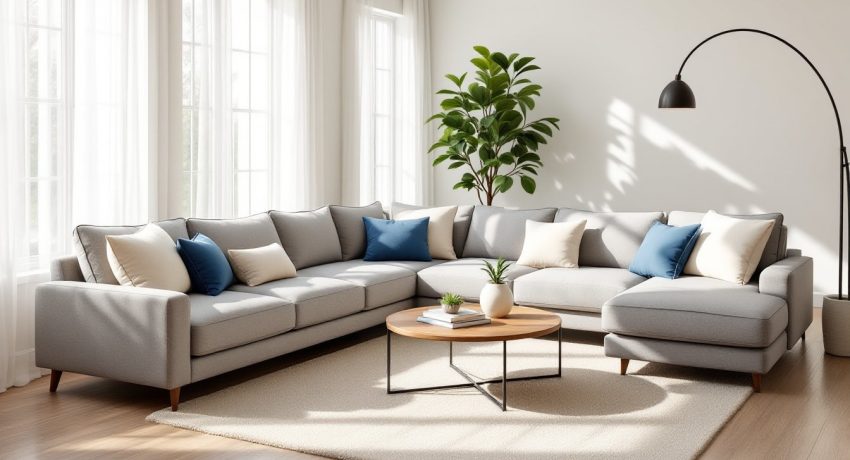

Deep sectional sofas have become a staple in modern living rooms, offering an inviting blend of comfort and versatility that traditional sofas can’t match. With seat depths ranging from 36 to 45 inches (compared to the standard 20-24 inches), these pieces transform a living room into a true lounging zone. Whether you’re hosting movie marathons, accommodating overnight guests, or just sinking into your favorite book, a deep sectional delivers. But choosing the right one involves more than picking a color, you’ll need to consider room dimensions, upholstery durability, cushion construction, and layout logistics before you commit to a piece this substantial.
Table of Contents
ToggleKey Takeaways
- A deep sectional sofa with 36+ inch seat depth offers superior lounging comfort compared to standard sofas, allowing you to sit cross-legged, stretch out, or curl up without constraint.
- Deep sectional sofas maximize seating capacity (5-7 people per L-shaped unit) and space efficiency in open-concept homes without requiring multiple furniture pieces.
- Proper measurement, layout planning, and 30-36 inches of clearance between the sectional and other furniture are essential to avoid costly returns and ensure comfortable functionality.
- Choose fabrics rated 25,000+ double rubs for durability and pair deep cushions with high-density foam (1.8+ lbs per cubic foot) or foam-wrapped innerspring for long-term comfort and support.
- Anchor your deep sectional sofa with a large area rug, balance its horizontal mass with tall vertical elements, and rotate cushions every 2-3 months to extend its lifespan and maintain visual appeal.
What Is a Deep Sectional Sofa and Why Homeowners Love It
A deep sectional sofa is defined by its seat depth, which typically measures 36 inches or more from the backrest to the front edge of the cushion. This extended depth allows users to sit cross-legged, stretch out fully, or curl up without their legs dangling off the edge.
Unlike standard sofas with seat depths around 20-24 inches, deep sectionals prioritize lounging comfort over formal seating. They’re modular by nature, with individual sections (corner units, armless chairs, chaises, and ottomans) that can be arranged in L-shapes, U-shapes, or custom configurations to fit a room’s footprint.
Homeowners gravitate toward deep sectionals for a few practical reasons. First, they maximize seating capacity without requiring multiple furniture pieces, critical in open-concept homes where the living room serves multiple functions. Second, the depth creates a more relaxed, informal vibe that suits family rooms and media spaces. Third, modular components allow for reconfiguration if you move or rearrange, offering flexibility that a traditional three-seat sofa can’t provide.
The deep cushion design does come with trade-offs. Shorter individuals may find their feet don’t touch the floor when seated upright, and the footprint demands more floor space than standard seating. But for households that value comfort and casual living, these compromises rarely outweigh the benefits.
Key Benefits of Deep Sectional Sofas for Modern Living Spaces
Deep sectionals deliver measurable advantages beyond just extra cushion depth. Here’s what makes them worth the investment:
Versatile Seating Capacity
A typical L-shaped deep sectional can comfortably seat 5-7 people, compared to the 3-4 capacity of a standard sofa and loveseat combo. This makes them ideal for households that entertain regularly or have large families. The chaise component doubles as a daybed for guests, eliminating the need for a separate sleeper sofa in many cases.
Enhanced Comfort for Multiple Activities
The extra depth supports full-body lounging, you can prop pillows behind your back, tuck your feet under you, or stretch out horizontally. This flexibility works equally well for napping, reading, gaming, or working on a laptop with a lap desk. Standard sofas force you to choose between sitting upright or awkwardly angling your body.
Space Efficiency in Open Layouts
In open-concept homes, a deep sectional anchors the living zone without requiring additional chairs or ottomans. It defines the conversation area while keeping sightlines open to adjacent dining or kitchen spaces. Corner units make use of wall space that would otherwise go unused, maximizing square footage in compact rooms.
Durability and Long-Term Value
Because deep sectionals are built to handle heavy use, manufacturers typically construct them with reinforced frames (often kiln-dried hardwood or engineered wood), 8-way hand-tied springs or sinuous spring systems, and high-density foam cores rated at 1.8-2.5 lbs per cubic foot. These materials outlast budget sofas by years, making the upfront cost more defensible when amortized over a 10-15 year lifespan.
Many deep sectionals also feature removable, machine-washable covers, a practical feature for homes with kids or pets. Manufacturers like those featured on design and renovation platforms often highlight fabric durability ratings, which can help you compare upholstery performance before buying.
How to Choose the Right Deep Sectional Sofa for Your Room
Selecting a deep sectional requires careful planning. Measure twice, order once, returns on furniture this size are expensive and logistically challenging.
Measuring Your Space and Planning the Layout
Start by measuring your room’s usable floor space, not just wall-to-wall dimensions. Account for doorways, windows, radiators, electrical outlets, and traffic flow. A common rule of thumb: leave 30-36 inches of clearance between the sectional and coffee table, and 24-30 inches between the sectional and walls or other furniture.
Sketch your room layout on graph paper (or use a digital floor planner) and draw the sectional’s footprint to scale. Most deep sectionals measure 90-120 inches along the long side and 60-90 inches on the short side for an L-shape. U-shaped configurations can span 140+ inches and require larger rooms to avoid overwhelming the space.
Check doorway and stairwell clearances before you order. Modular sectionals ship in separate boxes, but some pieces, especially corner units, may still exceed 32 inches in width. If you’re in a walk-up or have tight hallways, confirm the delivery path or consider sectionals with detachable legs and low-profile backs.
For rooms with architectural quirks (bay windows, angled walls, or built-ins), measure the sectional’s placement from multiple reference points. A laser measure simplifies this and reduces errors.
Selecting the Best Fabric and Cushion Fill for Comfort
Upholstery fabric determines both durability and maintenance. For high-traffic homes, look for fabrics rated 25,000+ double rubs (Wyzenbeek or Martindale abrasion tests). Performance fabrics like solution-dyed acrylic or polyester blends resist stains, fading, and moisture better than natural fibers.
- Microfiber/Performance Polyester: Budget-friendly, stain-resistant, easy to clean. Good for families with kids or pets.
- Linen Blends: Breathable and textured, but prone to wrinkling and staining. Best for adult-only households.
- Leather/Faux Leather: Durable and wipeable, but can feel sticky in humid climates. Full-grain leather ages better than bonded or split leather.
- Velvet: Luxurious feel, but shows wear patterns and requires regular vacuuming. Choose high-pile synthetic velvet for better durability.
Cushion fill impacts both comfort and longevity. Most deep sectionals use one of three core types:
- High-Density Foam (1.8+ lbs/cu ft): Firm, supportive, retains shape well. Ideal if you sit upright often.
- Foam-Wrapped Innerspring: Adds bounce and airflow. Feels more traditional, like a mattress.
- Down/Feather Blend Over Foam Core: Plush and cloud-like, but requires regular fluffing and reshaping. Not ideal for sleeper use.
Avoid sectionals with polyester fiberfill alone, they compress quickly and lose support within 1-2 years. Some woodworking and DIY enthusiasts even build custom sectional frames following modular furniture plans to control cushion specs, though upholstery remains a trade skill best left to professionals.
Styling and Placement Tips for Deep Sectional Sofas
Once you’ve chosen your sectional, placement and styling make the difference between a cohesive room and a furniture showroom.
Anchor with a Large Area Rug
A rug grounds the sectional and defines the seating zone. Choose a rug large enough that at least the front legs of each sectional piece rest on it, ideally 8×10 feet or larger for most L-shaped configurations. This visually ties the sectional to the coffee table and surrounding furniture.
Balance Proportions with Tall Decor
Deep sectionals sit low and wide, so offset their horizontal mass with vertical elements: floor lamps, tall bookcases, or statement plants. A 60-72 inch tall arc lamp behind the chaise corner adds task lighting without cluttering the coffee table.
Use the Back for Room Division
In open-concept layouts, float the sectional away from the wall and use its back to separate the living area from the dining or kitchen zone. Add a narrow console table (12-18 inches deep) behind the sectional for extra storage or display space without blocking sightlines.
Layer Throw Pillows Strategically
Deep seats need lumbar support. Use 18-22 inch square pillows along the backrest and 12×20 inch lumbar pillows for lower-back support. Stick to 3-5 pillows per section to avoid visual clutter. Choose removable covers in complementary colors for easy washing.
Mind the Coffee Table Height and Distance
Pair deep sectionals with coffee tables 16-18 inches high, slightly lower than the seat height (typically 18-20 inches). The table should measure two-thirds the length of the sectional’s long side. For example, a 100-inch sectional pairs well with a 60-66 inch coffee table. Builders looking for custom coffee table projects can find detailed plans on resources like Fix This Build That, which offers tutorials for furniture builds that complement oversized seating.
Plan for Power and Connectivity
If your sectional backs up to a wall, install floor outlets or use flat-plug extension cords to power lamps and charge devices without visible cords running across the floor. Some sectionals include built-in USB ports and power outlets, worth the upcharge if you use the sectional as a work-from-home spot.
Rotate Cushions Regularly
Flip and rotate seat and back cushions every 2-3 months to prevent uneven wear and compression. This simple habit extends cushion life by years and keeps the sectional looking fresh.
Conclusion
Deep sectional sofas offer unmatched comfort and flexibility for modern living spaces, but they demand thoughtful planning. Measure carefully, invest in quality cushion construction and durable upholstery, and style the piece to balance its substantial footprint. Done right, a deep sectional becomes the anchor of your home, a place where family gathers, guests linger, and comfort meets function.