
Ants marching across countertops, trailing through pet food, or building mounds in the lawn, it’s one of the most persistent pest problems homeowners face. Amdro ant killer has been a go-to solution for decades, using a bait-based approach that targets entire colonies rather than just the ants you see. Whether you’re dealing with fire ants in the yard or sugar ants in the pantry, understanding how Amdro products work and how to apply them correctly makes the difference between temporary relief and complete elimination.
Table of Contents
ToggleKey Takeaways
- Amdro ant killer uses a delayed-action bait formula with hydramethylnon that targets entire colonies, including the queen, by allowing worker ants to carry poison back to the nest before dying.
- Granular formulas work best for outdoor perimeter defense and fire ant mounds, while liquid bait stations are ideal for indoor use and sheltered areas like garages and basements.
- Avoid spraying contact insecticides near Amdro bait stations, as sprays repel ants and prevent them from returning to the colony with the poison.
- Apply perimeter treatments in a 12-inch band around foundations at a rate of 1 pound per 250 linear feet, and wait 24 hours before watering to allow ants to discover the bait.
- Amdro ant killer is effective against 15+ species including fire ants, carpenter ants, and odorous house ants, though results take 1 to 2 weeks and reapplication may be needed in wet climates.
- Combine chemical treatment with habitat modification—eliminating cracks, moisture, and wood-to-soil contact—for the most effective long-term ant control.
What Is Amdro Ant Killer and How Does It Work?
Amdro ant killer is a bait-based insecticide that uses hydramethylnon as its active ingredient. Unlike contact sprays that only kill ants on the surface, Amdro works through a delayed-action formula. Worker ants discover the bait, consume it, and carry it back to the colony where they share it with the queen and other ants. The delayed effect, typically taking 24 to 48 hours, is critical because it allows the bait to spread throughout the colony before ants start dying.
The active ingredient disrupts cellular respiration in insects, essentially starving their cells of energy at the mitochondrial level. This delayed toxicity is what makes bait systems effective against social insects like ants. If the product killed on contact, workers would die before returning to the nest, and the queen would survive to keep reproducing.
Amdro products come in both granular and liquid bait station formats. Granular formulas work well for outdoor applications, think fire ant mounds, perimeter treatments, and lawn applications. Bait stations are designed for indoor use or targeted outdoor placement, keeping the bait contained and protected from weather.
Most Amdro formulations are labeled for 15+ ant species, including Argentine ants, carpenter ants, fire ants, harvester ants, and odorous house ants. Check the product label to confirm coverage for your specific pest.
Types of Amdro Ant Killer Products for Different Situations
Choosing the right Amdro product depends on where ants are active and how severe the infestation is. Here’s a breakdown:
Amdro Ant Block Home Perimeter Ant Bait (Granules)
This is the granular formula designed for outdoor perimeter defense. Apply it in a 12-inch band around the foundation, along driveways, or near entry points. One application typically covers up to 540 linear feet. It’s weather-resistant and remains effective for up to three months under dry conditions. Use this when you’re seeing ant trails entering the house or when you want preventive coverage during peak ant season (spring and summer).
Amdro Kills Ants Liquid Ant Bait Stations
These pre-filled stations work well indoors or in sheltered outdoor areas like garages, patios, and crawl spaces. Each station contains a liquid bait that attracts ants quickly. Place them along baseboards, under sinks, near pet food areas, or wherever you see ant activity. They’re tamper-resistant, making them safer around kids and pets compared to loose bait. Replace stations every three months or when the bait is depleted.
Amdro Fire Ant Bait (Granules)
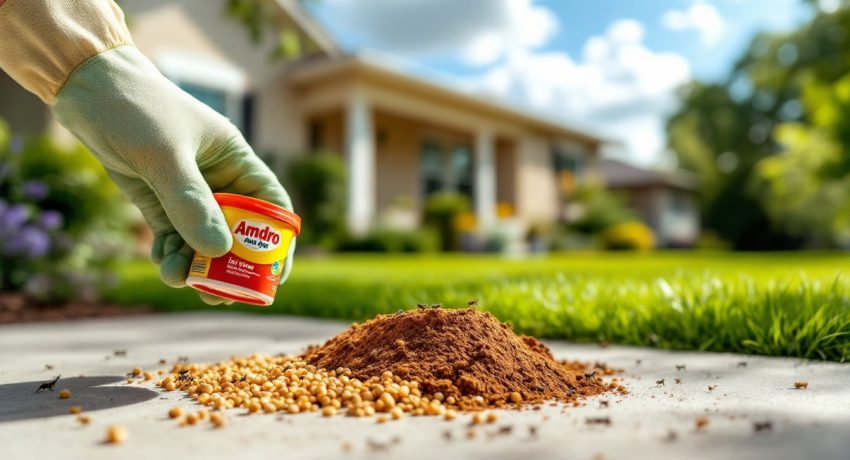
Specifically formulated for fire ants, this granular bait is applied directly to mounds or broadcast across the lawn. For mound treatment, sprinkle 2 to 5 tablespoons around each mound without disturbing it. For yard-wide treatment, apply at a rate of 1 to 2 pounds per acre. Fire ants are aggressive and painful when disturbed, so this broadcast method minimizes contact.
Amdro Ant Killing Bait Stakes
These outdoor stakes are inserted into soil near ant trails or nesting sites. They deliver bait in a protected housing that resists rain and irrigation. Ideal for flower beds, vegetable gardens (check label restrictions), and landscape areas where loose granules might wash away.
How to Use Amdro Ant Killer Effectively in Your Home
Proper application makes or breaks bait effectiveness. Ants are picky, and environmental factors influence their feeding behavior.
Indoor Application Tips
Start by identifying ant trails. Don’t kill the ants you see, follow them to find entry points and nesting sites. Place liquid bait stations within 6 to 12 inches of trails, but not directly on top of them. Ants prefer to discover bait on their own rather than being forced through it.
Use 4 to 6 bait stations per room depending on size and infestation severity. Common placement areas include:
- Along baseboards and wall-floor junctions
- Under sinks and appliances
- Near trash cans and pet food bowls
- Inside cabinets where food is stored (keep stations away from direct food contact)
Do not spray insecticides near bait stations. Sprays repel ants or kill them before they can carry bait back to the colony. If you’ve recently sprayed, wait 3 to 5 days before deploying bait, and clean treated surfaces to remove residue.
Monitor stations weekly. If bait is consumed quickly, add more stations. If ants ignore the bait, they may be feeding on a different food source (protein vs. sugar). Remove competing attractants, crumbs, spills, and unsealed food, to make the bait the most appealing option.
Outdoor Application Tips
For perimeter treatment, apply granular bait in a continuous band around the foundation. Measure 12 inches out from the wall and apply at a rate of 1 pound per 250 linear feet. Use a handheld spreader for even distribution. Don’t water the area for 24 hours after application: moisture activates the bait but too much too soon can dissolve it before ants find it.
When treating fire ant mounds, apply bait in the late afternoon or early evening when ants are most active and temperatures are moderate (between 70°F and 90°F). Sprinkle bait in a 3- to 4-foot circle around the mound without disturbing it. Disturbed colonies may relocate before consuming enough bait.
For broadcast applications across lawns or large properties, use a rotary spreader calibrated to the product’s recommended rate (check the label, it’s usually 1 to 2 pounds per 5,000 square feet). Apply when grass is dry and no rain is forecasted for 24 hours. Many professionals recommend seasonal ant control strategies that combine bait applications with habitat modification.
Reapply every 90 days or sooner if heavy rain washes away granules. In high-moisture climates, consider using bait stakes instead of loose granules for better longevity.
Safety Precautions When Using Amdro Ant Killer
Amdro products are designed to be low-toxicity to mammals when used as directed, but proper handling protects your household and the environment.
Wear gloves when handling granules or opening bait stations. While hydramethylnon has low dermal toxicity, avoiding direct skin contact is standard practice with any pesticide.
Keep pets and children away from treated areas until granules are watered in (if label directs) or until bait stations are securely placed. Bait stations are tamper-resistant but not tamper-proof. Place them in areas inaccessible to curious toddlers or pets. If a pet ingests bait, contact a veterinarian and bring the product label.
Do not apply granules near water sources, storm drains, or areas prone to runoff. Hydramethylnon is toxic to aquatic organisms. Maintain a 10-foot buffer from ponds, streams, and wetlands.
Store products in original containers in a cool, dry place out of reach of children and pets. Never transfer bait to unmarked containers, this creates confusion and potential poisoning hazards.
Dispose of used bait stations according to label instructions. Most can be wrapped in newspaper and placed in household trash. Do not burn pesticide containers or discard them in recycling bins.
If you’re treating indoor areas where food is prepared, remove food, dishes, and utensils before placing bait stations. While stations are enclosed, it’s good practice to minimize any cross-contamination risk.
For outdoor applications in vegetable gardens or near edible plants, check the product label for restrictions. Some formulations are not labeled for use in food-growing areas. When in doubt, use bait stakes placed at the garden perimeter rather than broadcasting granules.
Pros and Cons: Is Amdro Ant Killer Right for Your Home?
Amdro has earned its reputation, but no single product works for every situation. Here’s an honest look:
Pros:
- Colony elimination: Targets the queen and brood, not just foraging workers, leading to long-term control.
- Broad-spectrum coverage: Effective against 15+ ant species, including difficult pests like fire ants and carpenter ants.
- Long-lasting protection: Granular formulas remain active for up to three months in dry conditions.
- Low mammalian toxicity: When used as directed, it poses minimal risk to humans and pets compared to contact insecticides.
- Multiple format options: Granules, liquid stations, and stakes provide flexibility for different applications.
Cons:
- Delayed results: It takes 1 to 2 weeks to see full colony elimination. If you need instant knockdown, contact sprays (used sparingly and away from bait) may be necessary as a temporary measure.
- Weather sensitivity: Heavy rain can wash away granules before ants consume enough bait. Reapplication may be needed in wet climates.
- Bait competition: In spring when natural food sources are abundant, ants may ignore bait. You may need to adjust timing or switch bait types (protein-based vs. sugar-based).
- Not for all ant species equally: Some ant species, like pharaoh ants, require multi-bait strategies or professional treatment due to colony fragmentation behavior.
- Environmental considerations: Toxic to aquatic life and bees if misapplied. Requires careful placement away from water and flowering plants during pollinator activity.
For most common household ant problems, especially outdoor infestations and perimeter control, Amdro delivers reliable results when applied correctly. It’s particularly effective for fire ant control in Southern states and for homeowners looking for a set-it-and-forget-it solution rather than repeated spraying. But, heavy indoor infestations or species like carpenter ants that may indicate structural damage often benefit from professional assessment. Local pest control companies can identify underlying moisture or wood issues that home improvement strategies alone won’t solve.
If you’re dealing with recurring ant problems even though proper bait application, inspect for conducive conditions: cracks in foundation, moisture intrusion, wood-to-soil contact, or overgrown vegetation touching the house. Ant control is most effective when you combine chemical treatment with habitat modification.