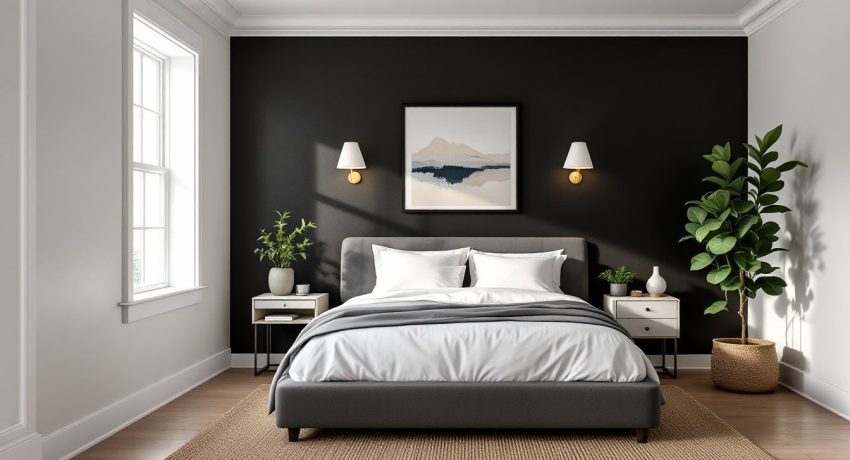

A black bedroom accent wall might sound intimidating, but it’s one of the most effective ways to add depth, drama, and modern sophistication to a sleeping space. Unlike lighter accent colors that can read as tentative, black makes a clear statement. It anchors furniture, hides architectural flaws, and creates a focal point without requiring expensive materials or complex installation. Whether someone’s working with a dated rental bedroom or refreshing a primary suite, a black accent wall in bedroom design delivers high visual impact for minimal investment, usually under $75 in materials for an average 10×12-foot wall. The key is execution: choosing the right wall, finish, and surrounding elements to keep the space inviting instead of cave-like.
Table of Contents
ToggleKey Takeaways
- A black accent wall in bedroom design delivers dramatic visual impact and modern sophistication for under $75 in materials, making it a budget-friendly way to transform any sleeping space.
- The wall behind the bed is the ideal candidate for a black accent wall since it frames the headboard, creates a natural focal point, and limits the dark color to one uninterrupted plane.
- Proper lighting is essential when using black paint—layer ambient, task, and accent lighting with dimmer switches to prevent the room from feeling cave-like and to reflect warm artificial light effectively.
- Black paint requires two coats, quality primer, and meticulous wall prep including sanding and TSP cleaning to achieve professional, even coverage without visible roller marks.
- Balance a black accent wall with light-colored bedding, mirrors, and at least two other light walls to maintain brightness and prevent the space from feeling too enclosed or moody.
Why Choose a Black Accent Wall for Your Bedroom?
Black does things most paint colors can’t. It recedes visually, making ceilings feel taller and small rooms feel more intimate rather than cramped. This works especially well in bedrooms, where a cozy, enclosed feeling often reads as comfortable rather than claustrophobic.
Depth and contrast are the main advantages. A black wall makes white trim pop, highlights artwork without competing for attention, and provides a neutral backdrop that works with nearly any bedding color, from blush pink to forest green. Designers often use black to mask problem walls with multiple windows, awkward angles, or surface imperfections that would show through lighter colors.
From a practical standpoint, black hides scuffs, handprints, and minor wall damage better than white or beige. Touch-ups blend seamlessly, and there’s no yellowing over time like with off-white paints. It’s also a budget-friendly alternative to wallpaper or wood paneling when someone wants texture and visual weight without the installation complexity.
Black accent walls pair well with both modern and traditional styles. In minimalist spaces, they provide necessary visual weight. In eclectic or bohemian rooms, they unify disparate elements. The versatility is hard to beat for a single gallon of paint.
Best Bedroom Walls to Paint Black
Not all walls are equal candidates. The wall behind the bed is the most common choice for good reason, it frames the headboard, creates a built-in focal point, and limits the black to one uninterrupted plane. This wall typically has the fewest obstructions (outlets, switches, windows), making paint prep and application cleaner.
A wall perpendicular to windows works well in rooms with strong natural light. The black surface absorbs light during the day and reflects warm artificial light at night, creating different moods throughout the day. Avoid painting the wall opposite large windows, as it can create a visual “black hole” effect that flattens the room.
In narrow or oddly shaped bedrooms, painting the shortest wall black can visually widen the space by drawing the eye across rather than down the length. This technique works especially well in long, tunnel-like rooms common in older homes or converted attics.
Skip walls with multiple doors, built-in closets, or heavy electrical work. The interruptions break up the visual plane and make the black read as fragmented rather than intentional. Also avoid exterior walls with insulation issues, dark colors can highlight temperature differentials and condensation problems that need addressing before any cosmetic work.
Choosing the Right Black Paint Finish and Shade
Black isn’t just black. Paint manufacturers offer dozens of formulations, and the undertones matter. True blacks have minimal color bias and read neutral in all lighting. Warm blacks contain brown or red undertones and pair well with wood furniture and brass fixtures. Cool blacks have blue or green undertones and work in modern spaces with chrome and white.
Test samples in the actual room before committing. Paint a 2×2-foot section on the target wall and observe it at different times of day. What looks sophisticated in morning light might read purple or green under evening incandescent bulbs.
Finish selection is critical. Matte or flat finishes hide wall imperfections best and create a velvety, non-reflective surface that feels luxurious. They’re harder to clean but show fewer streaks during application, important when rolling dark colors. Budget one gallon per 350 square feet with matte blacks, as they absorb more paint than lighter colors.
Eggshell or satin finishes offer slight sheen and better washability, which matters in bedrooms where walls get touched frequently (light switches, headboard contact). They show roller marks and surface flaws more readily, so wall prep becomes non-negotiable. Skip semi-gloss or gloss finishes in bedrooms unless going for a specific lacquered look, they amplify every imperfection and create distracting light reflections.
For bedrooms with textured drywall or orange-peel finish, matte formulations minimize the visual noise. Smooth, freshly skimmed walls can handle satin if durability is a priority.
Design Styles That Work Best with Black Accent Walls
Modern and contemporary spaces are natural fits. Clean lines, minimal furniture, and monochromatic palettes let the black wall function as architecture rather than decoration. Pair with white bedding, concrete-look nightstands, and metal pendant lights for a gallery-like feel.
Industrial design thrives with black accents. Exposed brick, metal bed frames, and Edison bulb fixtures all complement a black accent wall without competing. The darkness echoes warehouse aesthetics while keeping the space residential. Many DIY furniture projects incorporate raw wood and metal finishes that pair naturally with black walls.
Scandinavian minimalism uses black as a grounding element against all-white spaces. A single black wall prevents the “sterile hospital” effect while maintaining the bright, airy feeling Scandinavian design requires. White oak floors, linen curtains, and simple platform beds complete the look.
Black also works in bohemian and eclectic bedrooms, where it unifies busy patterns and multiple wood tones. A black wall provides visual rest among layered textiles, plants, and collected objects. It’s a backdrop, not a statement piece, in these spaces.
Traditional and transitional styles require more care but can succeed. Dark walls reference historical interiors (libraries, Victorian parlors) when paired with crown molding painted in contrasting white or cream. Upholstered headboards, table lamps with fabric shades, and area rugs soften the formality. Dark bedroom designs show how classic furniture shapes balance modern wall color.
How to Balance a Black Accent Wall with Lighting and Decor
Layered lighting is non-negotiable. A single overhead fixture won’t cut it, the black wall absorbs too much light. Install a combination of ambient, task, and accent lighting. Bedside table lamps (minimum 60-watt equivalent LED) provide reading light and create warm pools that reflect off the black surface. Wall sconces mounted 60-65 inches from the floor add vertical light and architectural interest.
Consider a dimmer switch on overhead fixtures to adjust intensity based on time of day. Full brightness in the morning prevents the room from feeling dim: lower settings in the evening create intimacy without gloom. Track lighting or picture lights directed at the black wall itself add depth by creating subtle shadows and highlights.
White or light-colored bedding provides essential contrast. The black wall needs a visual break, and crisp white sheets or light gray duvets create that separation. Avoid dark bedding unless going for a fully moody, cocoon-like space, which can work but limits flexibility.
Artwork and mirrors both function well on black walls but require proper installation. Use picture-hanging strips rated for the frame weight, or locate studs for heavier pieces. White or light wood frames create strong contrast: black or dark frames can disappear unless the artwork itself is light-colored. Mirrors double available light and prevent the wall from feeling like a dead end.
Keep at least two other walls light, white, cream, light gray. This maintains brightness and prevents the space from reading as a cave. If the ceiling is standard 8 feet or lower, paint it white to preserve vertical space. Taller ceilings (9+ feet) can handle a darker ceiling color if desired, but white remains the safer choice.
Texture matters. Incorporate wood tones, woven baskets, plants, and fabric to warm the space. Black walls can feel cold in overly minimal settings: organic materials add necessary softness.
Step-by-Step Guide to Painting Your Black Accent Wall
Materials needed:
- Black paint (1 gallon covers ~350 sq ft, matte or eggshell)
- Primer (gray-tinted if available: improves coverage)
- 9-inch roller with ½-inch nap for smooth walls, ¾-inch for textured
- 2-inch angled brush for cutting in
- Painter’s tape (FrogTape or similar low-bleed formula)
- Drop cloths
- Paint tray and liner
- Spackle and putty knife
- 120-grit sandpaper
- TSP cleaner or degreaser
- Work light for inspecting coverage
Step 1: Prep the wall. Remove outlet covers, switch plates, and any wall-mounted hardware. Fill nail holes and cracks with spackle, let dry completely (usually 2-4 hours), then sand smooth with 120-grit paper. Wipe down the entire wall with TSP solution to remove dust, grease, and residue. Clean walls = better paint adhesion.
Step 2: Tape edges. Apply painter’s tape along baseboards, crown molding, adjacent walls, and ceiling line. Press edges firmly with a putty knife to prevent bleed-through. Dark paint is unforgiving, sloppy edges show.
Step 3: Prime. Even if the wall is currently a light color, prime it. Black paint has less hiding power than most people expect, and primer provides a consistent base that reduces the number of color coats needed. A gray-tinted primer (available at most paint stores) cuts down on the greenish or brownish cast that can show through dark topcoats. Let primer dry 4+ hours or overnight.
Step 4: Cut in edges. Using the angled brush, paint a 2-3 inch border around all edges, ceiling line, corners, baseboards. Work in 3-4 foot sections and maintain a wet edge to avoid lap marks. This is easier with two people: one cutting in, one rolling.
Step 5: Roll the field. Load the roller evenly (don’t oversaturate), and use a W pattern to distribute paint, then fill in with vertical strokes. Work in 3×3-foot sections, overlapping edges while they’re still wet. Dark colors show roller marks if applied unevenly, so take time here. Use a work light angled across the wall to spot missed areas.
Step 6: Apply second coat. Black almost always needs two coats for even coverage. Wait 4-6 hours between coats (check can instructions). The second coat should go faster since you’re covering black with black.
Step 7: Remove tape and inspect. Pull tape at a 45-degree angle while the final coat is still slightly tacky (about 30-60 minutes after application). This prevents peeling. Touch up any bleeds with a small brush. Reinstall outlet covers and hardware after paint fully cures (24-48 hours).
Safety notes: Ventilate the room with fans and open windows. Wear nitrile gloves and safety glasses. Black paint stains skin and floors persistently, use drop cloths even if floors are “already messy.”
Disposal: Let paint trays and liners dry completely, then dispose of according to local regs. Most jurisdictions allow dried latex paint in regular trash: confirm with local waste management.
Conclusion
A black accent wall in the bedroom isn’t a decorating risk, it’s a calculated design decision that adds depth, sophistication, and practicality when executed properly. Choose the right wall, invest in quality paint and prep work, and balance the darkness with intentional lighting and light-colored surrounding elements. The project takes a weekend and costs less than most furniture purchases, but the visual impact rivals much more expensive renovations. For homeowners looking to refresh a bedroom without structural changes, black delivers.