
Black stainless steel refrigerators have moved from a niche option to a mainstream choice for homeowners looking to update their kitchens without a full remodel. The finish offers a darker, more contemporary alternative to traditional stainless while delivering real practical advantages, especially if anyone in the household has ever scrubbed fingerprints off appliances. It’s not just about looks. Black stainless resists smudges better, pairs with a wider range of cabinet colors, and holds value when it’s time to sell. Before committing to the purchase, though, it’s worth understanding what makes this finish different, how it fits into various kitchen layouts, and what maintenance it actually requires.
Table of Contents
ToggleKey Takeaways
- Black stainless steel refrigerators use a molecular-level darkening process (PVD or electrochemical treatment) that resists smudges far better than traditional stainless while maintaining durability and corrosion resistance.
- Black stainless steel finishes vary by brand—Samsung, LG, GE, and KitchenAid each have distinct undertones—so compare floor models before purchasing multiple appliances from different manufacturers.
- Black stainless refrigerators offer superior design flexibility, pairing seamlessly with white, gray, natural wood, and bold cabinet colors, making them a contemporary choice that holds steady resale value.
- Daily maintenance requires only a damp microfiber cloth; avoid abrasive scouring pads and chemical cleaners that can strip the fingerprint-resistant coating and compromise the finish.
- French door models are the most popular configuration for black stainless refrigerators, but counter-depth units, side-by-side, and top-freezer styles offer practical alternatives depending on kitchen layout and space constraints.
- Before committing, confirm warranty coverage for the coating, verify brand compatibility if expanding your appliance suite, and measure delivery pathways carefully since these refrigerators typically weigh 250–350 pounds.
What Makes Black Stainless Steel Different From Traditional Finishes
Black stainless steel isn’t a coating or paint job, it’s stainless steel treated with a darkening process that alters the surface at a molecular level. Most manufacturers use physical vapor deposition (PVD) or an electrochemical process to deposit a thin layer of titanium or other metals onto the steel, creating that deep charcoal finish.
This differs from painted or powder-coated black appliances, which can chip or scratch down to the base material. True black stainless steel maintains the underlying steel’s durability and corrosion resistance, with the dark layer bonded directly to the metal. It’s still magnetic in most cases, so refrigerator magnets will stick.
One complication: black stainless isn’t standardized across brands. Samsung’s version has a slightly warmer, bronze undertone. LG’s leans cooler and darker. GE and KitchenAid each have their own formulations. If you’re planning to mix and match appliances from different manufacturers, the finishes may not match perfectly. It’s not a dealbreaker, but it’s worth seeing floor models side by side before ordering.
Traditional stainless steel reflects more light and shows every fingerprint, water spot, and smudge within minutes. Black stainless absorbs light instead of reflecting it, which reduces glare and masks minor surface contact. That’s the primary functional difference homeowners notice day to day.
Top Benefits of Choosing a Black Stainless Steel Refrigerator
The most immediate benefit is smudge resistance. Black stainless steel doesn’t eliminate fingerprints entirely, but it makes them far less visible than on traditional stainless. Families with young children or anyone who opens the fridge a dozen times a day will appreciate not wiping down the doors every evening.
Black stainless also offers more design flexibility. It pairs well with white cabinets, gray cabinets, natural wood, and even bold colors like navy or forest green. Traditional stainless can look cold against warmer tones, while black stainless provides a bridge between industrial and cozy aesthetics. It works in both modern kitchens and transitional spaces where shaker cabinets meet subway tile.
Resale value holds steady. While black stainless isn’t as universally neutral as white or traditional stainless, it’s no longer considered trendy or niche. Most buyers view it as a contemporary finish that doesn’t require immediate replacement. It’s a safer bet than bold color appliances, which can polarize potential buyers.
Fingerprint Resistance and Easy Maintenance
Black stainless refrigerators typically feature a fingerprint-resistant coating applied by the manufacturer. This coating is a hydrophobic layer that repels oils from skin contact. It’s not bulletproof, greasy hands or food spills will still leave marks, but routine contact from opening the door won’t create the streaky mess that traditional stainless does.
Maintenance is straightforward. A microfiber cloth dampened with water handles daily touch-ups. For deeper cleaning, a drop of dish soap in warm water works without damaging the finish. Avoid abrasive sponges, scouring pads, or cleaners with bleach or ammonia, which can strip the protective coating or discolor the surface.
Some manufacturers recommend their own branded cleaners, but those are often just diluted surfactants in a spray bottle. Generic stainless steel cleaners usually work fine, but test on an inconspicuous spot first, black stainless formulations vary, and some cleaners leave a hazy residue on darker finishes.
Best Black Stainless Steel Refrigerator Styles for Your Kitchen Layout
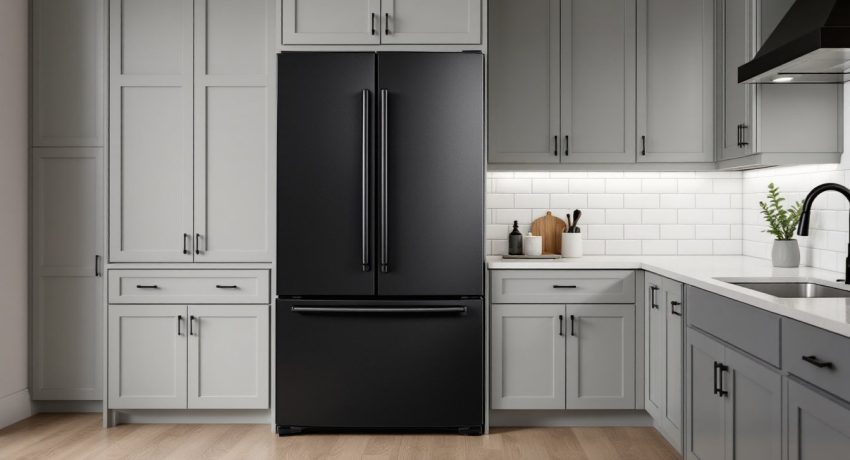
French door models are the most common configuration in black stainless. They fit standard 36-inch openings, offer wide shelves for sheet pans and platters, and the bottom freezer keeps frozen items at a comfortable height. Capacities range from 22 to 28 cubic feet, suitable for families of three to six.
If the kitchen has a narrow galley layout, a counter-depth French door reduces the fridge’s projection by three to four inches. Counter-depth units align with standard 24-inch-deep base cabinets, creating a built-in look without the custom price tag. Trade-off: interior capacity drops by 15 to 20 percent compared to standard depth.
Side-by-side refrigerators in black stainless work well in tight spaces where a French door swing would block traffic. The narrower doors require less clearance, and the vertical split gives equal access to fresh and frozen items without bending. Shelf width is more limited, though, wide items like pizza boxes or party platters may not fit.
For smaller households or secondary kitchens, top-freezer models are available in black stainless, though selection is more limited. These are the most energy-efficient style and cost significantly less than French door units. They’re also the easiest to repair, with fewer electronic components and simpler door mechanisms.
Built-in refrigerators in black stainless are offered by premium brands, but expect to pay two to three times the cost of freestanding models. Built-in models integrate flush with cabinetry and often accept custom panels, though some homeowners prefer the black stainless finish exposed as a design statement.
How to Match Black Stainless Steel With Your Kitchen Design
Black stainless steel appliances serve as a visual anchor. They add weight and contrast without the harshness of pure black. Pair them with light-colored cabinetry, white, cream, light gray, or natural maple, to create definition. The contrast keeps the space from feeling too monochromatic.
For countertops, quartz in white, gray, or speckled patterns complements black stainless well. Granite with black or charcoal veining ties the finish into the stone. Butcher block or walnut countertops introduce warmth that balances the cooler tone of the appliances. Avoid all-black countertops unless the goal is a dramatic, moody aesthetic: the lack of contrast can flatten the design.
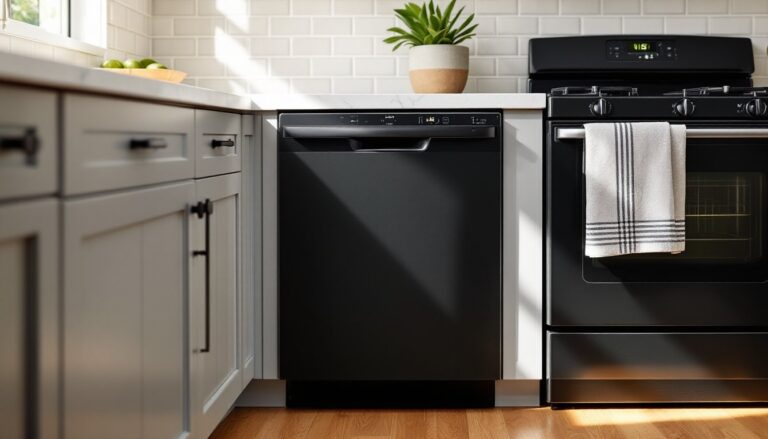
Hardware and fixtures should echo the finish. Matte black cabinet pulls, faucets, and light fixtures create a cohesive look. Brushed nickel or stainless steel hardware also works, especially if other appliances (like a dishwasher or microwave) remain in traditional stainless. Mixing black and stainless is acceptable as long as the distribution is intentional, don’t let one black stainless refrigerator sit alone among five stainless appliances.
Backsplash choices depend on the overall style. White subway tile keeps things classic. Darker tile, like charcoal or graphite, can work if cabinets and walls are light. Glass or metallic backsplashes add shine that contrasts with the matte black finish. Avoid busy patterns that compete for attention: simpler designs from sources like The Kitchn often show how restraint creates impact.
If the kitchen has open shelving or glass-front cabinets, dishware and glassware become part of the palette. White dishes pop against black stainless. Colored ceramics or wooden bowls add warmth. The goal is balance, enough contrast to define zones without creating visual chaos.
Caring for Your Black Stainless Steel Refrigerator: Cleaning and Maintenance Tips
Daily cleaning requires just a damp microfiber cloth. Wipe in the direction of the grain if the surface has any texture, though most black stainless finishes are smooth. This removes light dust, smudges, and minor spills without chemicals.
For tougher grime, mix a few drops of mild dish soap in warm water. Dampen the cloth, don’t soak it, and wipe the surface. Follow with a dry microfiber towel to prevent water spots. This handles most kitchen grease and food residue.
Avoid abrasive cleaners entirely. Steel wool, scouring pads, and powdered cleansers will scratch the finish and remove the fingerprint-resistant coating. Once that coating is compromised, the surface becomes more prone to smudging and may develop uneven patches.
Some homeowners use stainless steel cleaners marketed for traditional finishes. These can work, but test first. Apply a small amount to an inconspicuous area, like the side panel or lower corner, and check for streaking or discoloration after a few minutes. If the product leaves a hazy film, switch to plain soap and water.
For stubborn spots like dried food or adhesive residue, use a plastic scraper or credit card edge to lift the material gently. Follow up with soap and water. Don’t use solvents like acetone or rubbing alcohol unless the manufacturer explicitly approves them: some can dull the finish.
Polishing isn’t necessary. Black stainless is designed with a matte or satin finish, not a high shine. Polishing products may create uneven gloss or attract more fingerprints. If the surface starts to look dull after a year or two, it’s usually due to buildup of cleaning residue, not wear. A thorough wash with soap and water typically restores the original appearance.
Keep magnets and magnetic clips to a minimum. While black stainless is magnetic, constant friction from repositioning magnets can wear small areas over time, especially around handles where contact is frequent.
What to Consider Before Buying a Black Stainless Steel Refrigerator
Brand compatibility matters if you’re replacing or adding appliances over time. As mentioned, black stainless varies by manufacturer. If you plan to buy a matching range, dishwasher, or microwave later, stick with the same brand or confirm the finishes align in person. Some retailers and reviews on CNET highlight these finish variations in detail.
Check the warranty and finish durability. Most manufacturers cover defects in materials and workmanship for one year, but the dark coating isn’t always explicitly mentioned. Ask whether scratches, discoloration, or coating wear are covered. Some brands offer extended finish warranties: others don’t.
Delivery and installation follow standard procedures for full-size refrigerators. Measure the delivery path: doorways, hallways, and staircases. Black stainless refrigerators weigh the same as traditional stainless models, typically 250 to 350 pounds depending on size. You’ll need at least two people for safe maneuvering. If the fridge includes an ice maker or water dispenser, a ¼-inch water line connection must be accessible behind the unit. Confirm the shut-off valve works and there’s slack in the line for pulling the fridge forward during cleaning.
Consider energy consumption. Black stainless finish doesn’t affect efficiency, but refrigerator style does. Top-freezer models use the least energy. French door and side-by-side units with through-the-door ice and water use more. Check the EnergyGuide label for estimated annual operating cost. A difference of 100 kWh per year translates to roughly $12–$15 annually at average electricity rates.
Resale and remodeling plans factor in, too. If you’re planning a full kitchen renovation within two years, confirm the black stainless refrigerator fits the new design direction. If unsure, traditional stainless or white remains the safest neutral. Black stainless works well in transitional phases but commit to it if it’s staying long-term.
Finally, test the door swing and handle placement in the showroom. Black stainless shows fewer fingerprints, but handles still get touched constantly. Some models have recessed handles or internal grips that further reduce visible smudging. Make sure the door swing clears adjacent cabinets, islands, or walls, this applies to any refrigerator but is especially important with pricier finishes where returns or exchanges add hassle.