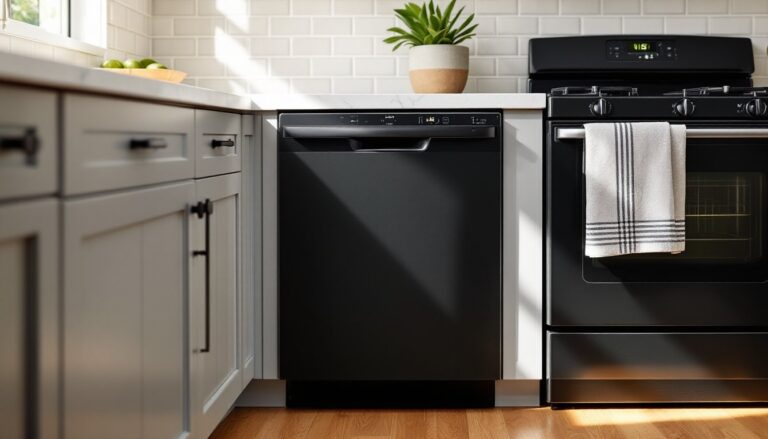
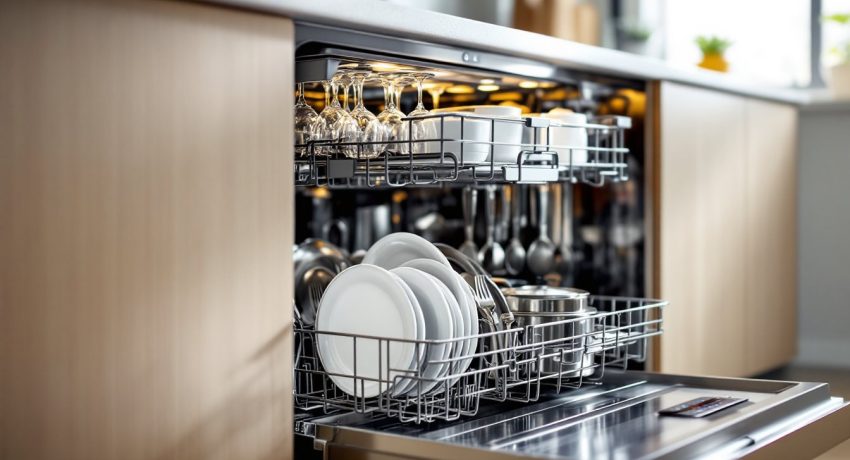

LG QuadWash dishwashers have become a go-to choice for homeowners who want restaurant-quality cleaning without the guesswork. Unlike traditional dishwashers that rely on a single spray arm rotating in one direction, QuadWash technology uses four spray arms that move independently to hit every angle of every dish. If you’re shopping for an LG dishwasher or considering an upgrade, understanding what sets QuadWash apart, and whether it’s worth the investment, can save time, water, and frustration in the long run.
Table of Contents
ToggleKey Takeaways
- LG QuadWash dishwashers use four independently rotating spray arms instead of one or two, ensuring water reaches every angle of dishes and eliminating blind spots for superior cleaning.
- TrueSteam technology heats water to over 160°F to sanitize dishes by killing 99.9% of bacteria and loosens baked-on food, making it ideal for households with young children or allergen concerns.
- QuadWash models are ENERGY STAR certified, using less than 3.5 gallons of water per cycle and saving $500–$700 in combined utility costs over a 10-year lifespan compared to older dishwashers.
- Installation is straightforward since LG QuadWash fits standard 24-inch openings with no cabinet modifications needed, and the system requires only basic plumbing and electrical connections.
- QuadWash prices range from $700–$1,400 depending on features, with models featuring TrueSteam and third racks typically priced between $900–$1,200 for maximum cleaning flexibility.
- The multi-motion spray arms include independently controlled nozzles that adjust pressure for different rack levels, allowing you to safely wash delicate glassware and heavy cookware in the same cycle.
What Makes LG QuadWash Technology Different?
QuadWash technology replaces the conventional single or dual spray arm setup with four spray arms: two on the bottom rack and two on the top. Each arm rotates in multiple directions, creating overlapping spray patterns that eliminate blind spots.
Most standard dishwashers use a single lower arm that rotates in one direction, relying on water pressure and detergent to clean upper racks. That works fine for lightly soiled dishes, but it struggles with baked-on food, narrow glass stems, or tall items that block the spray. QuadWash solves this by firing water from multiple angles simultaneously, top, bottom, and sides, ensuring every surface gets direct contact with pressurized water.
The system uses high-pressure nozzles that adjust spray intensity based on soil level. LG pairs this with smart sensors that detect load size and soil concentration, then optimize water usage and cycle time. You’re not running a heavy cycle for a half-empty load or under-cleaning a full rack of casserole dishes.
For DIYers planning a kitchen remodel or appliance upgrade, QuadWash models fit standard 24-inch dishwasher openings, so there’s no need to modify cabinetry or plumbing during installation. The spray arm configuration is factory-set, meaning you don’t need to adjust or calibrate anything after hookup.
Key Features and Benefits of LG QuadWash Dishwashers
Multi-Motion Spray Arms for Superior Cleaning
The multi-motion spray arms are the centerpiece of the QuadWash system. Unlike fixed-pattern arms, these rotate in sweeping arcs and back-and-forth motions, creating dynamic water coverage that adapts to rack configuration.
Each arm has independently controlled nozzles, so the dishwasher can increase pressure on the lower rack (where pots and pans sit) while using gentler sprays on the upper rack for glassware. This prevents breakage without sacrificing cleaning power on heavier items.
In practice, this means you can load mixing bowls, baking sheets, and wine glasses in the same cycle without needing to hand-wash delicate items first. The overlapping spray zones cover utensil slots, bottle necks, and the undersides of plates, areas where single-arm dishwashers often leave food residue.
LG’s third rack (available on many QuadWash models) adds a dedicated zone for flatware, spatulas, and small lids. This frees up space in the lower racks and positions utensils at an angle where spray arms can clean both sides in one pass. It’s a practical upgrade for anyone tired of re-washing forks or finding dried sauce on ladles.
TrueSteam Technology and Sanitization
TrueSteam is LG’s built-in steam generator, which heats water to over 160°F and injects steam into the wash cycle. This does two things: it loosens dried or baked-on food (think cheese on casserole dishes or oatmeal in bowls) and sanitizes dishes by killing 99.9% of bacteria.
Steam cycles are especially useful if you’re washing baby bottles, cutting boards, or anything that’s been in contact with raw meat. The steam pre-treats surfaces before the main wash, so you’re not relying solely on detergent and water temperature to break down tough residues.
Many appliance reviewers highlight steam as a standout feature for households with young children or anyone concerned about allergen reduction. Steam also reduces the need for pre-rinsing, which saves water and time during meal cleanup.
One note: TrueSteam cycles add about 15–20 minutes to total run time compared to standard wash cycles. If you’re running the dishwasher overnight or during off-peak hours, that’s negligible. But if you need a quick turnaround, use the express wash mode instead.
For LG stainless steel dishwasher models, the interior tub is made from stainless steel rather than plastic. This improves heat retention during steam cycles, speeds drying, and resists staining from hard water or heavily pigmented foods (like tomato sauce or turmeric).
Installation and Space Requirements
LG QuadWash dishwashers fit standard 24-inch-wide openings (23-7/8 inches actual cabinet width). Height is typically 33-7/8 to 34-5/8 inches, adjustable via threaded leveling legs in the front. Depth ranges from 24 to 25 inches, depending on the model and door hinge clearance.
Before installation, confirm your existing dishwasher’s mounting bracket locations. LG units use side-mount brackets that secure to adjacent cabinet walls, not top-mount brackets that attach to the underside of the countertop. If you’re replacing an older model with top mounts, you’ll need to patch and fill those screw holes.
You’ll need:
- 3/8-inch compression fitting for the water supply line (most LG models include a 5-foot braided stainless steel supply hose)
- 7/8-inch knockout plug on the dishwasher drain hose (connects to garbage disposal or sink tailpiece)
- 120V, 15-amp dedicated circuit (hardwired or plug-in: check local electrical code)
- Adjustable wrench, screwdriver set, level, and drill (for securing mounting brackets)
If you’re installing in a new construction or remodel, rough-in plumbing and electrical before setting cabinets. The water supply shutoff should be accessible under the sink, not buried behind the dishwasher. Drain hose loops should rise to at least the height of the sink drain to prevent backflow.
Permit requirements: Most jurisdictions don’t require a permit for like-for-like appliance replacement, but new installations or modifications to electrical circuits may need inspection. Check with your local building department.
For small kitchen layouts, LG offers models with adjustable racks that fold down or lift up to accommodate oversized cookware. This flexibility matters in tight galley kitchens where counter space is limited and you’re washing fewer, but larger, items per load.
Performance, Energy Efficiency, and Cost Savings
LG QuadWash models carry ENERGY STAR certification, meaning they use less than 3.5 gallons of water per cycle and consume around 270 kWh annually. For comparison, older dishwashers (pre-2013) use 6–10 gallons per cycle and 500+ kWh per year.
At an average electricity rate of $0.14 per kWh, that’s roughly $38 per year in energy costs for a QuadWash versus $70+ for an older unit. Water savings add another $40–$60 annually, depending on local rates. Over a 10-year lifespan, you’re looking at $500–$700 in combined utility savings.
Noise levels are rated at 42–46 decibels (dBA) for most QuadWash models. That’s quieter than a refrigerator hum and acceptable in open-plan kitchens where the dishwasher runs while you’re cooking or watching TV. LG uses Inverter Direct Drive motors, which have fewer moving parts than belt-driven pumps and generate less vibration.
If you’re shopping for an LG dishwasher for sale, expect pricing between $700 and $1,400, depending on finish (stainless steel, black stainless, or panel-ready), smart features (Wi-Fi connectivity, voice control), and cycle options. Models with TrueSteam and third racks typically land in the $900–$1,200 range.
Warranty coverage includes:
- 1 year parts and labor (full unit)
- 2–5 years parts only (motor and wash system)
- 10 years limited warranty on the Direct Drive motor
Register your dishwasher within 90 days of installation to activate the full warranty. Keep your receipt and model/serial number (located on the door frame) for service calls.
For product comparisons and detailed performance testing, independent labs measure cleaning scores, drying efficiency, and cycle time. QuadWash models consistently rank in the top tier for heavy soil removal and glassware care, though they run slightly longer cycles than budget models (90–120 minutes for normal wash vs. 60–75 minutes).
Conclusion
LG QuadWash dishwashers deliver consistent, thorough cleaning through multi-angle spray coverage and smart water management. For homeowners upgrading from older units or installing their first dishwasher, the combination of energy savings, quiet operation, and flexible rack systems makes QuadWash a practical long-term investment. Focus on models that match your kitchen layout and prioritize features you’ll actually use, steam sanitization, third racks, or smart connectivity, rather than chasing the highest-end trim packages.