
Indoor air quality isn’t just a comfort issue, it’s a health priority. Dust, pet dander, pollen, and volatile organic compounds (VOCs) circulate through your home every day, often at concentrations higher than outdoor air. Bionaire air purifiers offer a straightforward, budget-conscious solution for homeowners who want to tackle these pollutants without the complexity or price tag of high-end filtration systems. Whether you’re dealing with seasonal allergies, pet hair, or lingering cooking odors, understanding how these units work and how to choose the right model can make a real difference in your home’s air quality.
Table of Contents
ToggleKey Takeaways
- Bionaire air purifiers deliver budget-friendly filtration at $50–$150, making them an accessible choice for homeowners seeking affordable indoor air quality solutions without premium brand pricing.
- HEPA-type filters in Bionaire models capture 99% of particles down to 2 microns, which is sufficient for common allergens like dust mites, pet dander, and pollen for most households.
- Matching your Bionaire air purifier size to room square footage with a 20–30% coverage buffer ensures efficient operation and quieter performance at lower fan speeds.
- Proper placement with 18–24 inches of clearance on all sides and away from corners and moisture sources maximizes airflow and purifier effectiveness by 30% or more.
- Annual ownership costs for a Bionaire purifier total around $140/year when factoring in filters ($60) and electricity ($60), saving approximately $200 over 5 years compared to premium brands.
- Regular pre-filter cleaning every 2–4 weeks and HEPA-type filter replacement every 6–12 months are essential maintenance steps to prevent clogging and extend your unit’s lifespan.
What Makes Bionaire Air Purifiers Stand Out for Homeowners
Bionaire has positioned itself as a mid-tier brand that balances affordability with functional performance. Unlike premium brands that can run $400+ for a single room unit, Bionaire models typically fall in the $50–$150 range, making them accessible for homeowners testing the waters with air purification or outfitting multiple rooms on a budget.
The brand focuses on HEPA-type filtration (sometimes labeled as “HEPA-like”) rather than true HEPA. This distinction matters: true HEPA filters capture 99.97% of particles 0.3 microns or larger, while HEPA-type filters typically capture 99% of particles down to 2 microns. For most homeowners dealing with common allergens like dust mites, mold spores, and pet dander, HEPA-type filtration is sufficient. If you’re managing asthma or severe allergies, you may want to step up to a certified HEPA model from another manufacturer.
Bionaire units also incorporate carbon filters for odor control and ionizers in some models to help particles clump together and settle out of the air. The ionizer feature is optional on most units, useful for smoke or cooking odors, but some users prefer to disable it due to concerns about trace ozone production (though levels are typically well within EPA safety limits).
Key Features and Technology in Bionaire Models
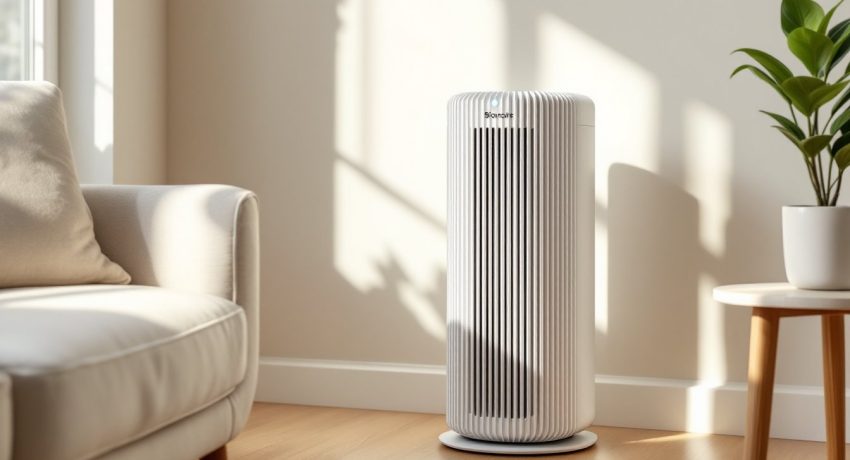
Most Bionaire air purifiers share a common design philosophy: simple controls, tower or box form factors, and multi-stage filtration. Here’s what you’ll typically find:
Filtration Stages:
- Pre-filter: Captures large particles like hair and lint. Vacuum or rinse this monthly to extend the life of the main filter.
- HEPA-type filter: Handles pollen, dust, and smaller airborne particles.
- Carbon filter: Absorbs odors from pets, cooking, and smoke. Lasts 3–6 months depending on use.
Fan Speeds:
Most units offer three speed settings, low, medium, and high. Low speed is nearly silent (around 30–40 decibels, comparable to a whisper) but moves less air. High speed ramps up to 50–60 decibels (about the level of normal conversation) and cycles the room air faster. If you’re running the unit in a bedroom, you’ll likely use low or medium overnight.
Coverage Area:
Bionaire publishes square footage ratings for each model, typically ranging from 100 to 400 square feet. These figures assume standard 8-foot ceilings and are based on cycling the room air about 4–5 times per hour. Open floor plans, vaulted ceilings, or heavy pollutant loads (like a home with multiple pets) will reduce effective coverage.
Optional Features:
- Ionizer: Helps with smoke and fine particulates. Toggle it off if you’re sensitive to ozone.
- Filter replacement indicator: LED or light that signals when it’s time to swap filters, usually based on a timer rather than actual air quality sensors.
- Night mode: Dims lights and runs the fan at low speed for quieter operation.
Choosing the Right Bionaire Air Purifier for Your Space
Matching the unit to your room size is the most critical decision. Running an undersized purifier is like trying to cool a 2,000-square-foot house with a window AC unit, it’ll run constantly and underperform.
Room Size and Coverage Considerations
Start by measuring your room’s square footage (length × width). For a bedroom that’s 12 feet by 14 feet, that’s 168 square feet. Look for a Bionaire model rated for at least that coverage, ideally with a 20–30% buffer. A unit rated for 200–220 square feet will cycle the air more efficiently and run on lower, quieter speeds.
If you have high ceilings (10+ feet), calculate cubic footage and increase your target coverage by 25%. Vaulted or cathedral ceilings mean more air volume to filter.
For open-concept spaces, either choose a larger unit (300–400 square feet) or run multiple smaller units in high-traffic zones. A single purifier in the corner of a combined kitchen-living-dining area won’t effectively filter the entire space.
Pet owners should consider models with a permanent pre-filter you can vacuum off weekly. Pet hair clogs filters fast, and replacing HEPA-type filters every 2–3 months gets expensive. The Bionaire BAP series is often recommended for pet dander, as it includes a washable pre-filter and higher airflow on the top speed setting.
For allergy sufferers, prioritize units with the highest CADR (Clean Air Delivery Rate) ratings you can afford. CADR measures how quickly the unit filters smoke, pollen, and dust, rated in cubic feet per minute (CFM). A CADR of 100+ for each category is solid for small-to-medium rooms.
Installation and Placement Tips for Maximum Effectiveness
Air purifiers aren’t complicated to set up, but placement makes or breaks performance. These aren’t decorative objects, airflow patterns matter.
Clear the Perimeter:
Leave at least 18–24 inches of clearance on all sides of the unit, especially around the air intake (usually the back or sides) and exhaust (typically the top or front). Tucking the purifier behind a couch or in a corner starves it of airflow and reduces efficiency by 30% or more.
Avoid Corners:
Place the unit near the center of the room or along a wall with open space. Corners create dead zones where air doesn’t circulate well. If you must use a corner, angle the unit slightly to direct airflow into the room.
Stay Away from Moisture:
Don’t place purifiers in bathrooms, laundry rooms, or near humidifiers. Excess moisture can damage the motor and promote mold growth inside the filter housing.
Height Matters:
Keep the unit on the floor or a low table. Warm, pollutant-rich air rises, and most purifiers pull air from the bottom. Mounting or elevating too high reduces the unit’s ability to capture floor-level dust and dander.
Bedroom Placement:
Position the purifier 6–10 feet from your bed, angled so the clean air flows across your sleeping area. Running it on low or medium overnight maintains air quality without disrupting sleep.
Avoid Obstructions:
Don’t cover the unit with fabric, place it behind curtains, or set objects on top. Air purifiers need consistent airflow to function, and covering vents can overheat the motor.
Electrical Considerations:
Plug directly into a wall outlet. Avoid power strips or extension cords, which can introduce voltage drops and reduce motor efficiency. Most Bionaire units draw 40–80 watts on high speed, comparable to a laptop, so they won’t overload a standard 15-amp circuit.
Maintenance and Filter Replacement Guide
Regular maintenance extends the life of your purifier and keeps it running efficiently. Neglect it, and you’re just circulating dirty air through a clogged filter.
Pre-Filter Cleaning:
Vacuum or rinse the pre-filter every 2–4 weeks. If you have pets, do this weekly. A clogged pre-filter restricts airflow, forcing the main filter to work harder and shortening its lifespan. Some models have a permanent, washable pre-filter, rinse it under lukewarm water, let it air-dry completely (24 hours), then reinstall.
HEPA-Type Filter Replacement:
Replace the main filter every 6–12 months, depending on usage and air quality. Heavy use (running 24/7 in a high-pollution environment) may require replacement at the 6-month mark. Light use in a clean environment can stretch to 12 months. Many experts who evaluate home air quality products recommend checking the filter visually every 3 months, if it’s visibly gray or caked with dust, swap it early.
Bionaire filters are model-specific. Check your user manual for the correct part number. Aftermarket filters exist and cost 20–30% less than OEM, but quality varies. Stick with Bionaire-branded filters if you want guaranteed fit and performance.
Carbon Filter Replacement:
Carbon filters lose effectiveness after 3–6 months as the activated carbon becomes saturated. You won’t see this visually, odor control just drops off. If you notice lingering smells, replace the carbon layer even if the HEPA-type filter looks clean.
Exterior Cleaning:
Wipe down the exterior with a damp microfiber cloth monthly. Dust and grime on the intake grills reduce airflow. Don’t use harsh cleaners or spray liquids directly on the unit, moisture can damage electronics.
Filter Replacement Indicator:
Most Bionaire units have a light or LED that signals when it’s time to replace filters. This is typically a timer-based system (e.g., 6 months of use), not a sensor that measures actual filter condition. Reset the indicator after installing a new filter by holding the reset button for 3–5 seconds (consult your manual for the exact procedure).
Storage:
If you’re storing the unit seasonally (e.g., only using it during allergy season), remove and bag the filters to prevent dust buildup. Store in a dry, climate-controlled space.
Cost Analysis: Are Bionaire Air Purifiers Worth the Investment?
Let’s break down the real cost of ownership, not just the sticker price.
Upfront Cost:
Bionaire units range from $50 to $150 depending on coverage area and features. A basic 100-square-foot model runs around $50, while a 400-square-foot tower with an ionizer and filter indicator hits $120–$150. That’s 30–50% less than comparable models from brands like Honeywell or Levoit.
Annual Filter Costs:
Budget $40–$80 per year for replacement filters. A HEPA-type filter typically costs $20–$35, and you’ll replace it 1–2 times per year. Carbon filters (if sold separately) add another $10–$20 annually. If you’re running multiple units, these costs add up, three purifiers can mean $150–$240 in filters yearly.
Energy Costs:
Running a Bionaire purifier 24/7 on medium speed (averaging 50 watts) costs about $4–$6 per month at the national average electricity rate of $0.16 per kWh. That’s $48–$72 annually per unit. High speed bumps this to $6–$9 per month.
Total Cost of Ownership (5 Years):
- Unit: $100 (mid-range model)
- Filters: $60/year × 5 = $300
- Electricity: $60/year × 5 = $300
- Total: $700 over 5 years, or $140/year
Compare that to a premium brand running $400 upfront with $100/year in filters and similar energy costs, you’re looking at $900 over 5 years. Bionaire saves about $200 over that period, assuming comparable performance.
Performance Trade-Offs:
You’re sacrificing true HEPA filtration, smart features (app control, air quality sensors), and quieter operation. Testing by independent reviewers shows Bionaire units perform adequately for common allergens but lag behind premium brands for ultra-fine particles and smoke. If you’re managing severe respiratory conditions, the extra cost for a medical-grade HEPA unit may be justified. For general dust and pet dander control, Bionaire offers solid value.
Resale and Longevity:
Bionaire units typically last 3–5 years with proper maintenance. Motors and electronics eventually wear out. There’s little resale market for used air purifiers, assume zero residual value.
Alternative Investments:
Before buying, consider whether you’d get more value from source control: sealing duct leaks, upgrading to MERV 13 furnace filters (if your HVAC can handle the airflow restriction), or adding exhaust fans in kitchens and bathrooms. Air purifiers are a supplement, not a replacement for good ventilation and filtration at the HVAC level.