
Power outages don’t send out invitations. Whether it’s a summer storm, winter ice, or a blown transformer, homeowners need to know exactly how long their refrigerator and freezer will keep food safe when the grid goes down. The difference between salvageable groceries and a $300 trash run often comes down to timing and strategy. This guide breaks down the science of food safety during outages, identifies which items spoil fastest, and gives you actionable steps to extend your fridge’s cold-holding capacity without power.
Table of Contents
ToggleKey Takeaways
- Refrigerators maintain safe food temperatures below 40°F for approximately 4 hours without power, while freezers last about 48 hours if full and unopened.
- Keep refrigerator and freezer doors closed during outages—every opening shortens the safe timeframe and allows warm air to compromise food quality.
- High-risk foods like raw meat, dairy, eggs, and cooked leftovers must be discarded after 4 hours above 40°F, regardless of appearance or smell.
- If an outage is forecasted, lower your fridge to 34-36°F beforehand and fill freezer gaps with water bottles or ice to extend how long food will last.
- Use a reliable thermometer to monitor actual temperatures during and after an outage, and discard perishables if the fridge exceeded 40°F for more than 4 hours.
- Document spoiled food with photos and receipts, as many homeowners’ insurance policies cover food loss from power outages caused by storms or other covered events.
How Long Food Stays Safe When the Power Goes Out
Temperature is the only thing standing between fresh food and bacterial growth. A refrigerator without power becomes a slowly warming box, and the clock starts ticking the moment the compressor stops.
The 4-Hour Rule for Refrigerators
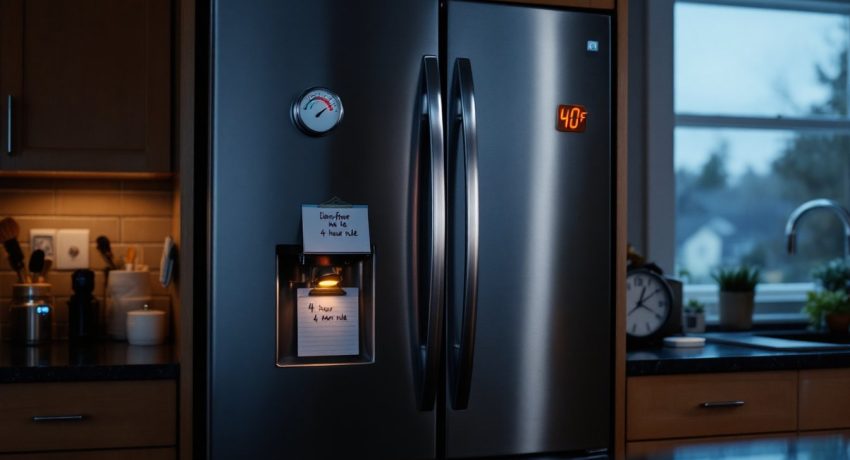
A closed refrigerator will maintain safe temperatures (below 40°F) for approximately 4 hours without power. That’s the official guideline from the USDA and health departments nationwide. After that 4-hour window, perishable foods, dairy, meat, poultry, seafood, cooked leftovers, and cut produce, enter the danger zone where bacteria multiply rapidly.
The 4-hour countdown assumes the door stays shut. Every time someone opens the fridge to check on food or grab a drink, warm air rushes in and shortens that window. A well-stocked fridge holds cold better than a half-empty one because the mass of cold food acts as thermal ballast. If the unit was running properly before the outage and set to 37-38°F, you’ve got a better shot at reaching the full 4 hours.
This timeline can stretch slightly if the outage happens overnight when ambient temperatures are cooler, or shrink if it’s a hot summer day and the kitchen is already 85°F. Use a refrigerator thermometer (not just the built-in display) to monitor actual temps during and after the outage.
The 48-Hour Rule for Freezers
Freezers are far more forgiving. A full, unopened freezer will hold a safe freezing temperature (below 0°F) for about 48 hours. A half-full freezer cuts that time roughly in half, around 24 hours, because there’s less frozen mass to maintain the cold.
If you know an outage is coming (like an announced maintenance shutdown), fill empty space in the freezer with containers of water, bags of ice, or even wadded newspaper. The added mass helps the unit stay colder longer. Chest freezers typically outperform upright models during outages because cold air naturally sinks and stays put when the door is closed.
Food that still contains ice crystals or feels refrigerator-cold (40°F or below) can usually be refrozen, though the texture might suffer. Anything that’s reached room temperature or smells off should be discarded, no exceptions.
Which Foods Spoil First and What Lasts Longest
Not all refrigerated items are created equal. Some foods turn hazardous within hours, while others can ride out a power outage with minimal risk.
High-Risk Foods (Discard After 4 Hours Above 40°F):
- Raw or cooked meat, poultry, and seafood
- Deli meats and hot dogs
- Eggs and egg-based dishes (quiche, custard, mayo-based salads)
- Soft cheeses (brie, cream cheese, ricotta)
- Milk, cream, and opened containers of non-dairy milk
- Cooked pasta, rice, and casseroles
- Gravy, broth, and meat-based sauces
- Cut fruits and vegetables
Moderate-Risk Foods (Inspect Carefully):
- Hard and aged cheeses (cheddar, parmesan), can tolerate brief warming
- Butter and margarine, safe if they stayed cool to the touch
- Fresh whole fruits and vegetables, usually fine unless visibly spoiled
- Opened jars of pickles, olives, and other acidic items
Low-Risk Foods (Generally Safe):
- Unopened condiments (ketchup, mustard, hot sauce, soy sauce)
- Peanut butter and jelly
- Bread and baked goods
- Fresh uncut produce
- Unopened processed juices
When in doubt, the old adage holds: if it smells off, looks questionable, or has been above 40°F for more than 4 hours, toss it. Food poisoning isn’t worth the gamble, and many food safety tips during power outages emphasize the importance of erring on the side of caution.
How to Keep Food Cold Longer During a Power Outage
Preparation and smart tactics can stretch that 4-hour window and save hundreds of dollars in groceries.
Before an Outage (If You Have Warning):
- Lower the thermostat settings. Drop the fridge to 34-36°F and the freezer to -5°F or colder. The colder you start, the longer you coast.
- Fill gaps in the freezer. Use water bottles, freezer packs, or bags of ice to create thermal mass.
- Group refrigerated items. Cluster perishables together in the fridge. Cold items in close contact stay colder longer.
- Freeze gel packs or ice blocks. Keep a stash of reusable ice packs ready to deploy.
During an Outage:
- Keep doors closed. This is the single most effective strategy. Open the fridge or freezer only when absolutely necessary, and do it fast.
- Transfer critical items to coolers. If you have ice or frozen gel packs, move high-priority perishables (insulin, breast milk, expensive proteins) into insulated coolers. Layer ice above and below the food.
- Use block ice over cubed ice. Block ice melts slower. Freeze water in gallon jugs or buy dry ice if the outage is expected to last more than a day. Dry ice safety note: Handle with gloves, ensure ventilation, and never store in airtight containers.
- Cover the fridge with blankets. Draping moving blankets or sleeping bags over the fridge adds insulation. Don’t block vents or coils, but wrapping the sides and top helps.
- Monitor internal temps. Place a probe thermometer inside the fridge (on a middle shelf) and check it without opening the door if possible. Some wireless thermometers can transmit readings to your phone.
Post-Outage:
Once power returns, check internal temperatures immediately. If the fridge stayed at or below 40°F and the freezer at or below 40°F (with ice crystals still present), most food is safe. If temps rose higher, refer to spoilage guidelines.
For kitchen prep and storage strategies, homeowners often look to resources like The Kitchn for practical advice on organizing refrigerators and maximizing cold storage efficiency.
Signs Your Food Has Spoiled and When to Throw It Out
Visual and sensory cues can help, but temperature and time are the real arbiters of food safety.
Trust the Thermometer, Not Your Nose:
Bacterial contamination doesn’t always produce obvious odors or discoloration. If perishable food sat above 40°F for more than 4 hours, it should be discarded even if it looks and smells fine. Pathogenic bacteria (salmonella, E. coli, listeria) don’t announce themselves.
Red Flags to Never Ignore:
- Off smells: Sour, rotten, or ammonia-like odors
- Slimy texture: Especially on meat, poultry, or deli products
- Discoloration: Meat turning gray or green, dairy curdling
- Mold growth: Even a small patch can indicate widespread contamination below the surface
- Warm to the touch: If food feels room temperature, it’s been in the danger zone too long
Special Cases:
- Frozen food that thawed: If it still has ice crystals and stayed below 40°F, you can refreeze it (though quality may decline). If it’s completely thawed and warm, toss it.
- Condiments and hard cheeses: These are more acid- or salt-stable and can often be salvaged if they stayed relatively cool.
- Leftovers and prepared foods: These are high-risk. When in doubt, throw them out.
Document Losses for Insurance:
Take photos of spoiled food and keep receipts. Many homeowners’ insurance policies cover food loss from power outages, especially if caused by a covered event like storm damage. Check your policy and file a claim if the loss is significant. Some DIY and home improvement communities on Houzz discuss insurance claim processes and documentation tips for weather-related home damage.
Conclusion
Knowing how long a refrigerator can go without power, and what to do when the lights go out, turns a stressful situation into a manageable one. Stick to the 4-hour rule for fridges and the 48-hour rule for freezers, keep those doors closed, and don’t gamble on questionable food. A little preparation and a clear head save both money and health.